The critical question after a fresh manicure or pedicure is simple: How long does a regular manicure take to dry? This duration is dictated by complex technical factors, including polish chemistry, coat thickness, and environmental conditions. This technical analysis will detail the science of solvent evaporation and curing to provide precise methods for achieving the fastest possible set time for your polish.
How long does a regular manicure take to dry?
When we ask, “How long does a regular manicure take to dry?”, we are usually asking about three different stages of dryness:
1. Dry-to-the-Touch (The Initial Set)
- Definition: The surface of the polish is no longer tacky, and you can lightly brush it without transferring color. This is the stage where minor smudges are less likely.
- Estimated Time: 5 to 10 minutes per coat, on average.
- Mechanism: Most of the highly volatile solvents have evaporated, allowing the film former to solidify on the surface.
2. Hard Set (The Functional Dry)
- Definition: The polish has hardened enough to withstand most normal activity—you can search through your bag, put on a light jacket, or text without fear of completely ruining the manicure. However, deep pressure or friction can still leave an indentation.
- Estimated Time: 30 to 60 minutes.
- Mechanism: A significant portion of the remaining solvents has left the film, and the entire polish layer is moderately rigid.
3. Fully Cured (The Complete Set)
- Definition: The polish film is completely hardened, and all solvents have fully evaporated. It is now chip-resistant and truly “set.”
- Estimated Time: 12 to 24 hours.
- Mechanism: This is the time required for the film former to achieve its maximum hardness and durability. While this is the most technically accurate answer, most people are satisfied with the “Hard Set” time.
Factors Affecting Nail Polish Drying Time
Understanding these variables is crucial to getting a quicker, more durable manicure.
1. Polish Formula and Quality
High-quality polishes are formulated with specific blends of solvents to optimize both application and drying. Quick-dry formulas use highly volatile solvents that escape the film more rapidly. Conversely, polishes with a very high concentration of pigment or a thick viscosity may take longer because the solvents are trapped beneath the dense material.
2. Thickness of the Coats
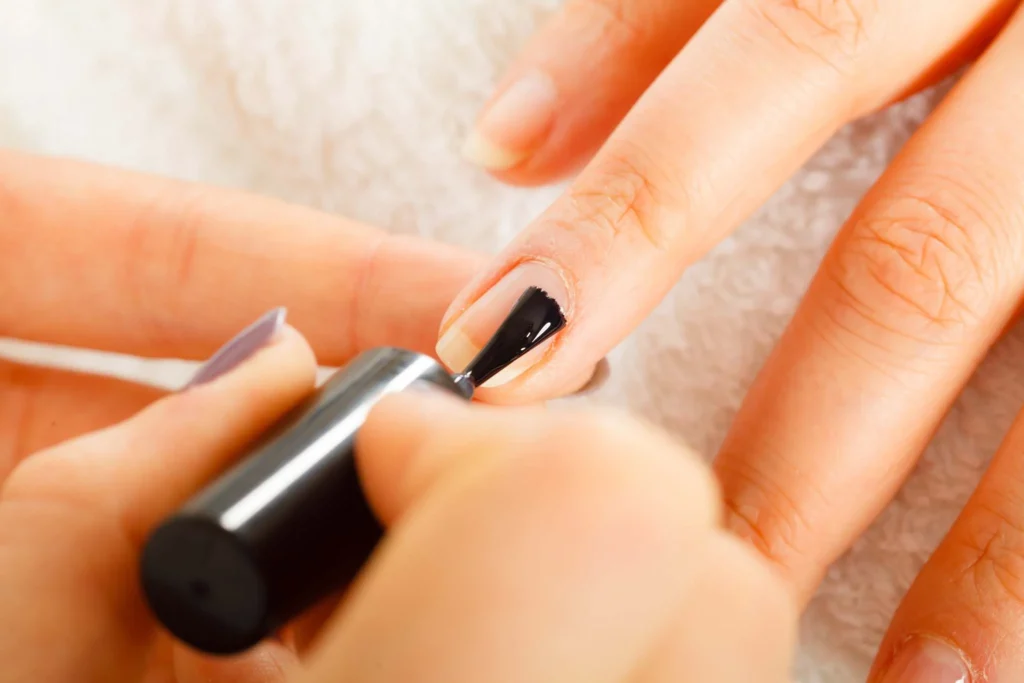
This is arguably the most critical factor. Thick coats trap solvents deep within the layer. The surface may dry quickly, but the underlying liquid polish remains soft. If you accidentally bump your nail, the wet center will ooze out and create a massive dent or smear.
Best Practice: Always apply two to three thin, even coats rather than one thick coat. Thin layers allow solvents to escape efficiently and uniformly, significantly decreasing the overall time it takes for a regular manicure to fully dry.
3. Base Coat and Top Coat Usage
Using the right supporting products can be a game-changer for speed and longevity.
- Base Coat: Creates a smooth, even surface for the color, aiding in a thinner, more consistent color layer application. A good base coat dries quickly and provides the foundation for the entire system.
- Quick-Drying Top Coat: These products are essential. They typically contain solvents that are formulated to penetrate the underlying color layers and speed up the evaporation of their solvents as well. They also create a hard, protective shield that gives the illusion of a full cure much sooner.
4. Environment and Climate
Drying is an act of evaporation, and evaporation is heavily influenced by the surrounding environment.
| Factor | Effect on Drying Time | Rationale |
| High Humidity | Significantly increases drying time. | Humid air is already saturated with moisture/solvent vapor, slowing down the rate at which solvents can leave the nail polish film. |
| Low Humidity | Significantly decreases drying time. | Dry air readily accepts the solvent vapor being released from the polish. |
| High Temperature | Generally decreases drying time. | Heat accelerates the kinetic energy of the solvent molecules, causing them to evaporate faster. |
| Airflow | Significantly decreases drying time. | Moving air constantly sweeps away the solvent-saturated air layer directly above the nail, replacing it with drier air, maximizing the evaporation rate. |
Technical Techniques to Accelerate Drying Time
If you’re wondering how long does a regular manicure take to dry and want the fastest possible answer, these techniques are scientifically proven to speed up the process:
1. The Ice Water Bath (The Cold Cure)
While heat accelerates evaporation, a sudden blast of cold temperature can help the polish film set faster by rapidly increasing its viscosity and hardening the structure.
- Method: After applying your quick-drying top coat, wait about one minute. Then, submerge your fingers in a bowl of ice water (containing actual ice cubes) for 2 to 3 minutes.
- Mechanism: The rapid drop in temperature effectively “shocks” the film formers into a solid state more quickly, drastically accelerating the initial hard set.
2. Utilizing Specialized Drying Products
Beyond quick-drying top coats, there are two specialized product categories designed to cut down on the time required for the polish to set properly:
- Drying Drops: These liquids are typically silicone-based and contain volatile solvents. When applied over the polish, the drops immediately mix with the surface layer, accelerating the overall solvent evaporation. The silicone also leaves a protective, slick film that prevents smudging.
- Drying Sprays: Function similarly to drops, often using a fine mist of quick-evaporating solvents to speed up the surface cure.
3. Optimize the Application Environment
Avoid painting your nails in a stuffy, humid room. Instead:
- Use a Fan: A gentle desk fan (not too strong, as it can cause bubbles) or a nail station fan provides optimal airflow to continuously carry away the solvent vapor.
- Paint in Thin Layers: This cannot be stressed enough. Thin layers are the single greatest technique for minimizing the time it takes for nail polish to fully set.
>>> Read More: How to make a regular manicure last longer.
Common Mistakes That Prolong Drying Time
1. Applying Polish Too Thickly
As discussed, this is the number one culprit. A thick coat will remain wet in the center for hours, leading to guaranteed dents and smudges.
2. Forgetting the Top Coat
A quick-drying top coat is not just for shine; it is a vital part of the drying system. Without it, you miss out on the dedicated, fast-evaporating solvents designed to speed up the set.
3. Attempting to “Dry” Nails with Heat
Using a hairdryer set to a hot temperature is counterproductive. While heat speeds evaporation, it also makes the polish soft and pliable, increasing the risk of rippling, bubbling, or smudging the polish before the film has fully set. Always use the cool shot setting if you must use a hairdryer, or rely on air exposure and cold water.
4. Going Straight to Bed
Even if your nails feel completely dry after an hour, the film is still soft. Sleeping with your hands pressed against sheets can cause “bed sheet marks” or subtle indentations in the soft polish layer. If you must paint your nails late, aim for a full two hours of setting time before going to sleep, or use a high-quality drying product to ensure the surface is fully cured.
Conclusion
To effectively answer the question, how long does a regular manicure take to dry, you must commit to a three-step process: two thin coats of color and one layer of a quick-dry top coat. Mastering the application technique is the most important factor in ensuring a rapid and durable finish, allowing you to enjoy your perfect manicure without the frustration of accidental smudges.