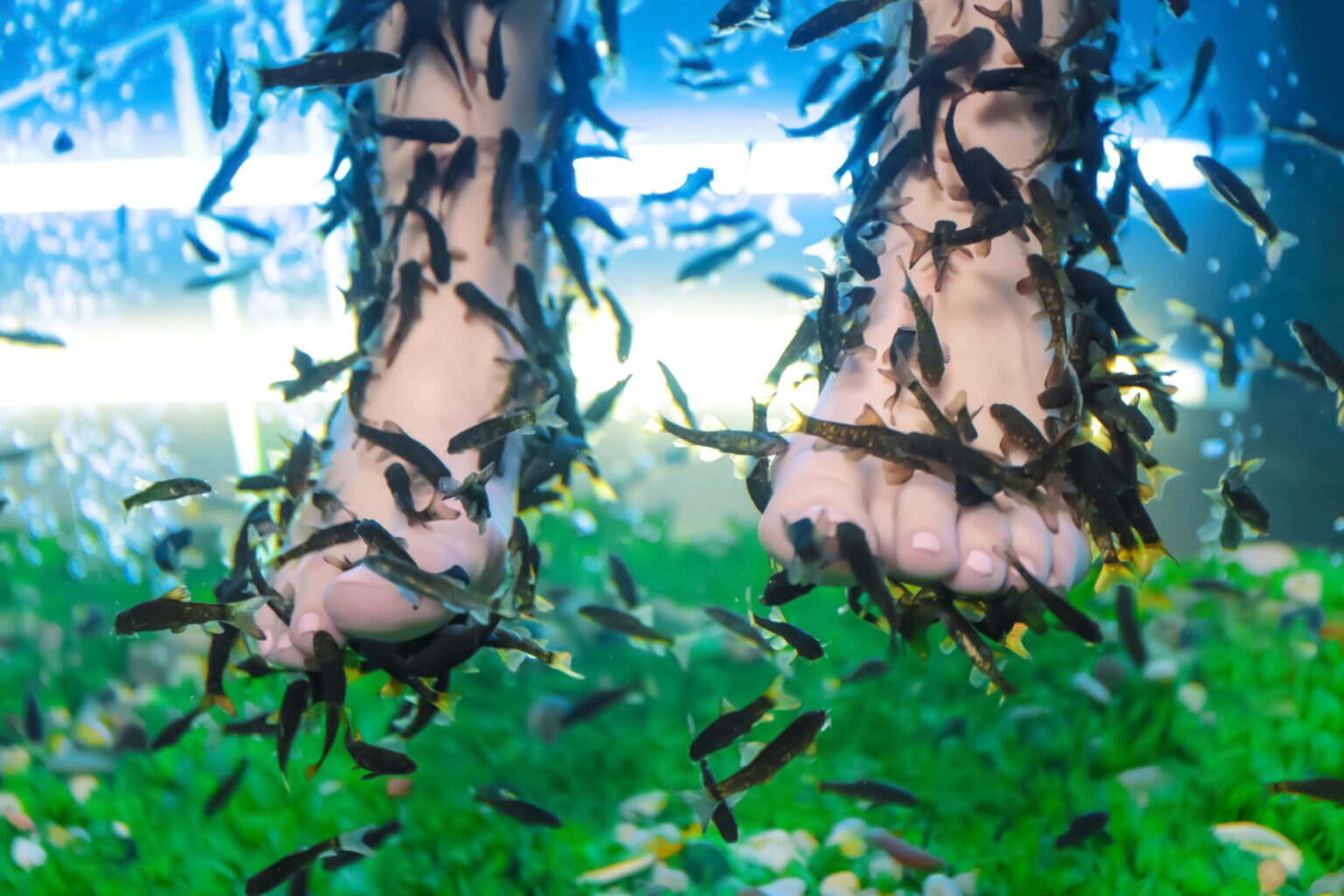
The concept of nail salon fish pedicure often raises curiosity among people looking for an alternative pedicure experience. Unlike traditional pedicure methods, this type of pedicure involves live fish and is often discussed in relation to hygiene, safety, and effectiveness within the broader pedicure industry.
What Is a Fish Pedicure at a Nail Salon?
A fish pedicure is a foot treatment performed at certain nail salons or spas where small fish are used to remove dead skin from the feet. The most commonly used species is Garra rufa, sometimes referred to as “doctor fish.” These fish gently nibble away dry or flaky skin while the feet are submerged in a water tank.
In a nail salon fish pedicure setting, the process replaces mechanical exfoliation tools with a biological method, relying on the fish’s natural feeding behavior rather than abrasive instruments.
How a Fish Pedicure Session Typically Works
Although procedures vary slightly by location, most fish pedicure sessions follow a similar sequence:
- Foot inspection and rinsing
The technician checks for open wounds, infections, or skin conditions and rinses the feet thoroughly before treatment. - Immersion in the fish tank
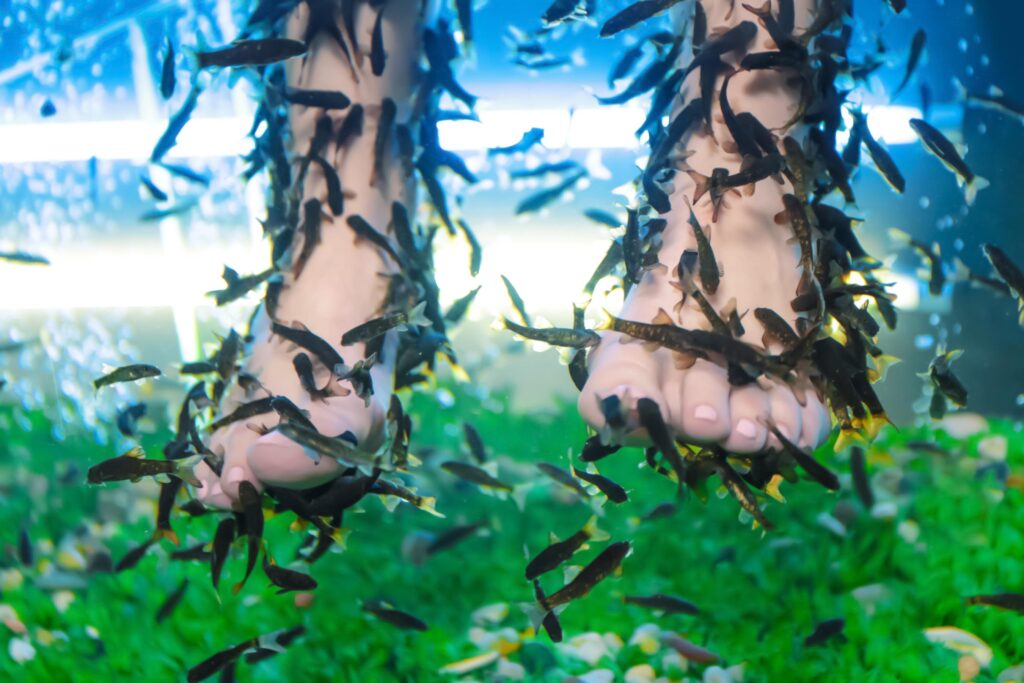
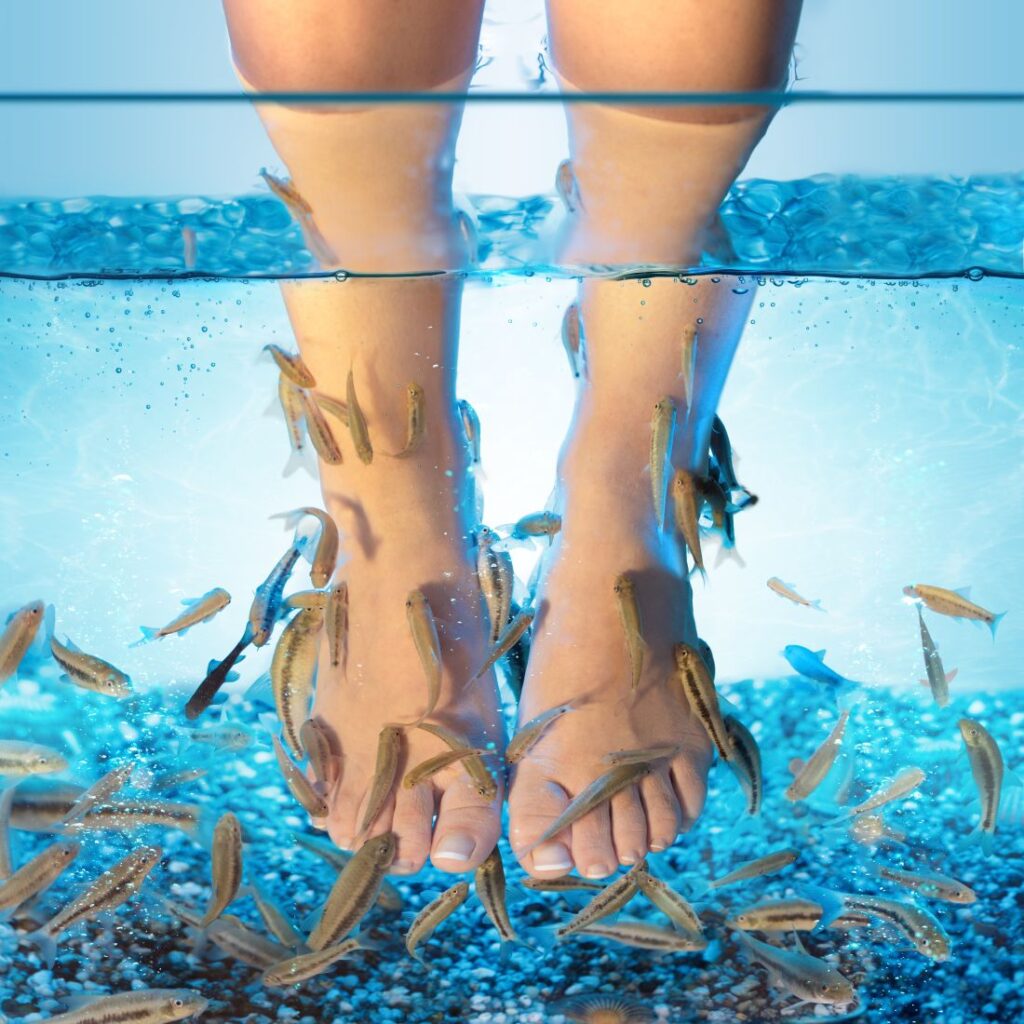
Feet are placed into a tank containing warm, filtered water and live fish. The fish begin feeding on dead skin almost immediately. - Active exfoliation phase
This stage usually lasts between 15 and 30 minutes, during which the fish focus on areas with thicker or drier skin. - Post-treatment rinse and moisturizing
After removal from the tank, feet are rinsed again and often finished with moisturizer or massage.
This method differs significantly from standard pedicure techniques that rely on files, blades, or chemical exfoliants.
The Science Behind Fish Pedicure Exfoliation
Fish pedicures rely on mechanical exfoliation through repeated, gentle contact rather than chemical or abrasive force. Garra rufa fish lack teeth capable of breaking healthy skin, which is why they target only loose, dead skin cells.
The mild suction and movement stimulate the skin surface, increasing blood flow and temporarily smoothing the outer layer of the feet. While this does not regenerate skin, it can improve texture in the short term.
Potential Benefits of Fish Pedicures
People interested in nail salon fish pedicure services often cite several perceived benefits:
- Gentle exfoliation without sharp tools
- A tickling, relaxing sensation
- Temporary smoothness of the feet
- A novel spa experience
Because no blades or harsh scrapers are used, some individuals feel the process is less aggressive than traditional exfoliation methods.
Hygiene and Safety Considerations
Safety is one of the most frequently discussed topics surrounding fish pedicures. Unlike traditional pedicure tools, fish cannot be disinfected between clients. This raises concerns about cross-contamination.
Key safety factors include:
- Water filtration systems
High-quality salons use continuous filtration and UV sterilization to reduce bacterial load. - Client screening
People with cuts, infections, diabetes, or weakened immune systems are often advised to avoid fish pedicures. - Local regulations
Some regions restrict or ban fish pedicure services due to hygiene regulations.
Understanding these risks is essential before choosing this type of pedicure treatment.
How Fish Pedicures Compare to Traditional Pedicures
When comparing a fish pedicure to a standard pedicure, the differences are significant. Traditional pedicures allow technicians to control pressure, tools, and sanitation precisely. Fish pedicures rely on natural behavior, which can be unpredictable.
Over time, regular mechanical exfoliation may provide more consistent results, while fish-based treatments are often viewed as occasional or experiential rather than routine care.
Longevity of Results
The smoothness achieved from a fish pedicure is generally temporary. Because only surface-level dead skin is removed, results typically last a few days to a week, depending on skin type and daily activity.
This is similar to many exfoliating treatments, but unlike callus-reduction tools, fish pedicures are not designed to address thick or hardened skin layers deeply.
Environmental and Ethical Considerations
Another aspect frequently discussed in relation to nail salon fish pedicure services is animal welfare. Fish are kept in confined tanks and exposed to frequent human contact, which may cause stress.
Ethical concerns vary by individual perspective, but responsible salons monitor water quality, tank size, and fish health closely to minimize harm.
Common Misconceptions About Fish Pedicures
Several myths surround fish pedicures:
- They cure skin conditions such as eczema or psoriasis
- They permanently soften feet
- They are completely risk-free
In reality, fish pedicures are cosmetic treatments and should not be viewed as medical or therapeutic solutions.
Who Should Avoid Fish Pedicures?
Fish pedicures are not suitable for everyone. People who should avoid this treatment include those with:
- Open cuts or sores
- Fungal or bacterial infections
- Diabetes or circulation issues
- Compromised immune systems
A consultation with a technician or healthcare provider is recommended if there is any uncertainty.
Are Fish Pedicures Worth Trying?
For individuals seeking a unique spa experience rather than long-term foot care, a fish pedicure can be an interesting option. However, it should be approached with realistic expectations regarding hygiene, results, and maintenance.
Those prioritizing precise sanitation and long-lasting results may prefer conventional pedicure methods performed with sterilized tools.
Conclusion
To understand the appeal and limitations of a nail salon fish pedicure, it is important to view it as an alternative exfoliation method rather than a replacement for traditional foot care. While the experience can be relaxing and novel, results are temporary and safety depends heavily on salon standards.
By understanding how fish pedicures work, their benefits, and their risks, individuals can make informed decisions about whether this pedicure option aligns with their comfort level and foot care goals.