A well-executed manicure is not only about color choice but also about technique. Every tip for regular manicure focuses on improving durability, appearance, and drying performance while protecting nail health. Understanding the technical steps behind a classic manicure allows you to achieve salon-quality results consistently.
Why Technique Matters in a Regular Manicure
A regular manicure relies on solvent-based nail polish, which dries through evaporation rather than light curing. Because of this, technique directly impacts drying time, smoothness, and longevity. Poor application habits-such as thick coats or rushed drying-can lead to smudging, dents, and early chipping.
By following proven manicure techniques and adopting a systematic approach, you can dramatically improve both appearance and wear time without changing products.
Understanding the Drying Process
Before applying any improvement strategy, it’s important to understand how nail polish dries.
Stage 1: Surface Dry (Dry-to-the-Touch)
At this stage, the polish no longer feels tacky. Most volatile solvents have evaporated from the surface, forming a thin film. Light contact is usually safe, but pressure can still damage the polish.
Stage 2: Functional Dry (Hard Set)
The polish is firm enough for light daily activities. However, deeper pressure can still cause dents. This is where most manicure mistakes occur-assuming the polish is fully dry when it is not.
Stage 3: Full Cure
All remaining solvents have evaporated, and the polish reaches maximum hardness. This can take up to 24 hours, even if the manicure feels dry much earlier.
Every effective application method is designed to move through these stages more efficiently.
Essential Nail Prep Tips
Proper preparation is the foundation of any successful manicure.
Clean and Dehydrate the Nails
Oils, lotion residue, and moisture prevent proper adhesion. Always cleanse nails with a gentle remover or alcohol before starting. This single step significantly reduces early chipping.
Shape and Smooth Consistently
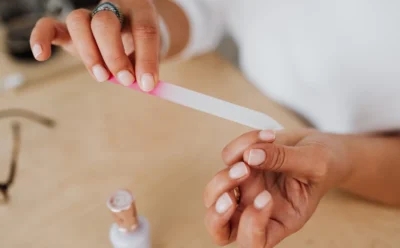
Uneven edges increase stress points where polish can lift. Filing in one direction and lightly buffing ridges creates a uniform surface for polish to grip.
Application Techniques That Make the Difference
Apply Thin, Controlled Layers
One of the most important rules in any tip for regular manicure is to apply multiple thin coats instead of one thick layer. Thin layers allow solvents to escape evenly, reducing drying time and preventing surface wrinkles.
Thick coats may look glossy initially but remain soft underneath, leading to dents hours later.
Use a Quality Base Coat
A base coat improves adhesion and smooths the nail surface. It also allows the color layer to be applied more evenly, which supports faster and more consistent drying.
Some base coats are formulated to dry quickly, helping speed up the overall process.
Choose the Right Top Coat
A fast-drying top coat is not optional—it is a critical part of the system. These top coats contain solvents that penetrate lower layers, accelerating evaporation throughout the polish stack while forming a protective surface shield.
Environmental Factors That Affect Results
Control Humidity
High humidity slows evaporation because the air is already saturated with moisture. Painting nails in a dry environment significantly improves drying speed and finish quality.
Improve Airflow
Gentle airflow removes solvent-saturated air from around the nail surface. A small desk fan works well, as long as it’s not strong enough to cause bubbling.
Avoid Heat-Based Drying
Hot air softens polish layers and increases movement within the film. This can cause rippling or smudging. If using a hairdryer, always use the cool setting.
Advanced Techniques to Speed Up Drying
Ice Water Method
After applying a quick-dry top coat and waiting one minute, submerging fingers in ice water for two to three minutes can help the polish set faster. The sudden temperature drop increases viscosity and stabilizes the film structure.
Drying Drops or Sprays
These products are designed to accelerate solvent evaporation at the surface while adding a slick barrier that prevents smudges. They are especially useful when time is limited.
Habits That Extend Wear Time
Even the best manicure technique can fail without proper aftercare.
Seal the Free Edge
Running the brush lightly across the tip of the nail with both color and top coat reduces chipping by protecting the most exposed area.
Avoid Water Exposure Immediately After
Water can penetrate polish layers before they fully cure. Avoid washing dishes or showering for at least two hours after finishing your manicure.
Use Cuticle Oil Daily
Hydrated cuticles and nails remain flexible, reducing micro-cracks in the polish that lead to chipping. This is one of the most overlooked but effective maintenance strategies.
Common Mistakes to Avoid
Rushing Between Coats
Applying the next layer too quickly traps solvents underneath. A brief wait-about one to two minutes between thin coats—is usually sufficient.
Skipping the Top Coat
Without a top coat, polish dries slower and remains more vulnerable to damage. Shine alone is not the primary benefit; protection and faster setting are.
Going to Bed Too Soon
Even if nails feel dry, pressure from sheets can leave impressions. Ideally, allow at least two hours before sleeping, or use a fast-drying system to reduce risk.
How Long Should a Regular Manicure Last?
With proper technique and care, a regular manicure can last:
- 5-7 days with minimal chipping
- Up to 10 days with careful maintenance and quality products
Following a structured approach and applying each layer correctly has a greater impact than switching brands frequently.
Conclusion
Mastering a tip for regular manicure is about understanding the science behind polish behavior and applying consistent, proven techniques. From nail preparation and thin layers to environmental control and aftercare, each step contributes to faster drying, smoother results, and longer wear.
By refining your application method and avoiding common mistakes, a regular manicure can look polished, professional, and durable-without unnecessary frustration or touch-ups.